


Democracy and journalism don’t need truth, they need good arguments
25th September 2026
Narain D. Batra
Journalist, author, and host of the America Unbound podcast.
The oldest problem of democracy is how do we come to agreement about the ‘facts’. We now live in a world where scientists are unable to agree on the nature of reality, and the proving grounds of politics are infected with fake news, deep fakes, and a decline of the institutions meant to keep them in check. Journalist Narain Batra argues, looking at the US example, we are entering a world of epistemic fragmentation where the silos of the internet have entered the real, physical world. A return to a stoic rejection of sophistry is the only way out.
On November 3rd, tens of millions of Americans will vote in the first midterms of the second Trump term, the first national test of whether anyone still agrees on what’s true enough to vote on. Whatever gets fabricated or denied between now and November won’t stay limited to a news cycle. It will show up on a ballot.
The extraordinary fact at the heart of American journalism began not with new technology but with a phrase uttered early in January 2017. Trump repeated the words “fake news” so often that they stopped functioning as a complaint about individual stories. Rather, they started functioning as a challenge to journalism itself.
Trump grasped something that none of his predecessors had understood or even had access to. A president no longer needs journalists to interpret him for the public. He now has the capacity to talk to the public directly. A tweet at four-thirty in the morning can set the day’s agenda before journalists smell their coffee. Once a president can bypass editors, and fact-checkers, calling the press “fake” stops being mere criticism. It becomes the rationale for a direct, unchecked line to the public. He doesn’t need to prove a story false – he only needs to persuade us that regardless of their status, journalists can’t be trusted. With his use of frequent putdowns and insults diminishing the role of journalists, it has become easy to circumvent them.
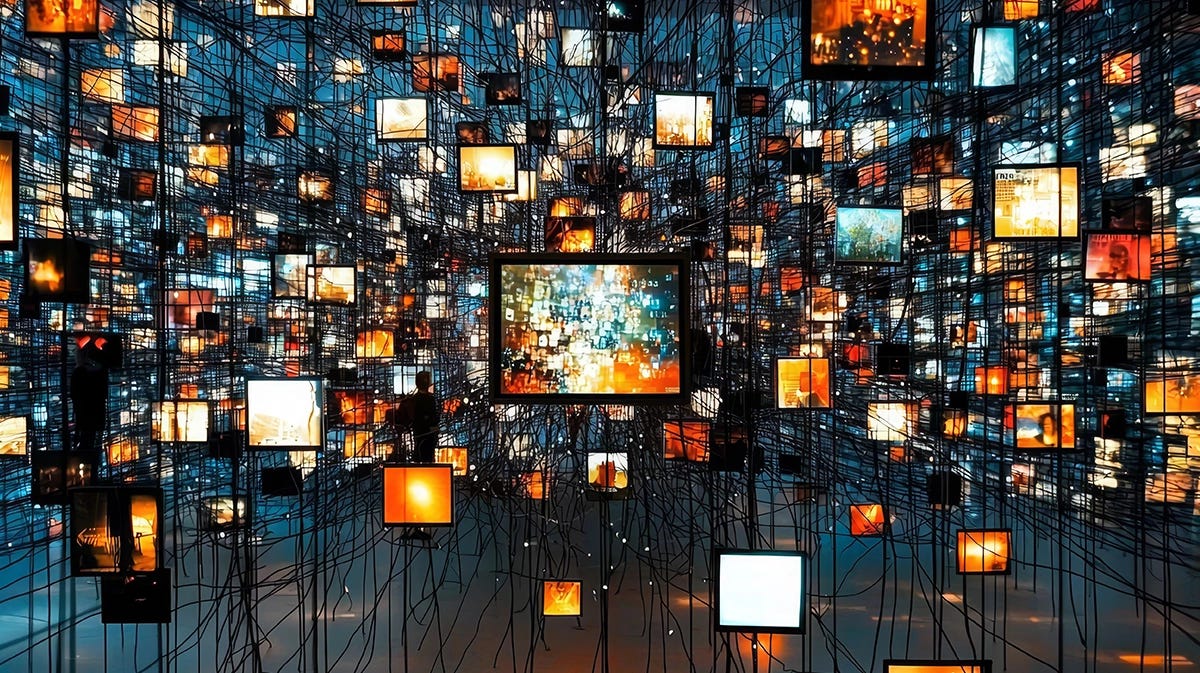
Trump’s Truth Social formalized the bypass. A sitting president can now publish statements, images, and increasingly AI-generated video directly, with nothing standing between impulse and audience. Trump has posted a long, escalating run of AI-generated imagery targeting political rivals over the past year. Wired dubbed him America’s first generative-AI president.
Elon Musk is the other half of this story, and he arrived by a different route. Where Trump proved a president could talk around the press, Musk bought a platform that much of the global conversation runs through. His stated reason for acquiring X (formerly Twitter) was seemingly a liberal one. He argued that centralized control over speech is itself a danger, and platforms should tilt toward openness. There’s a real principle in it that government censorship is extremely dangerous, and X is not the government.
But a platform doesn’t have to be the government to matter so colossally. When a handful of privately owned platforms become the infrastructure through which a democracy talks to itself, “it’s just a business decision” starts to ring more hollow.
Musk then folded his AI company, xAI, into X, producing something structurally new, a closed loop, with no independent checks from outside it. Someone posts a false claim on X. Grok reads it, because Grok is built into the same platform. A user then asks Grok whether the claim is true, and Grok answers inside that same feed. The chatbot ends up doing two jobs at once, reading the platform’s content and adding to it.
In summer 2024, five secretaries of state, from Michigan, Minnesota, New Mexico, Pennsylvania, and Washington, wrote to Musk after Grok falsely told users that ballot deadlines had already passed in nine states, within hours of Joe Biden dropping out of the race. The claim spread for over a week, reaching, in the officials’ own words, “millions of people,” before X corrected it. That fall, an analysis found that Musk’s own false and misleading election claims had been viewed roughly two billion times on X. An AI system embedded in a social network doesn’t just answer questions about the information environment. It becomes part of that environment, shaping what people believe about their ballot even as it claims to describe it.
___
A fabricated clip released twelve hours before polls close doesn’t need to survive careful scrutiny. It only needs to survive twelve hours.
___
The older worry was that people would believe a lie. The newer worry is worse that nobody will be able to tell the difference between a lie and a genuine recording. A photograph used to carry evidentiary weight for a simple reason. Someone had to be there, with a camera, when something actually happened. Editing software chipped away at that assumption. Generative AI has finished the job. This has produced what researchers call the “liar’s dividend.” Once everyone knows fabrication is easy, genuine evidence becomes deniable too. A politician caught on an authentic recording can simply claim “that’s AI,” and because the technology makes that claim plausible, the public has no reliable way to settle the question.
Detection tools help less than we’d like. NIST’s (National Institute of Standards and Technology) own review of technical approaches to labeling and tracing synthetic content concludes that watermarking and detection are useful signals, not guarantees. They tend to fail once an image or clip has been compressed, cropped, or reposted, which describes almost anything that actually circulates online during an election. We are building a democracy’s evidentiary standards on a technology we cannot reliably audit in real time, weeks before people vote. I was shaken when I read Hany Farid, a digital forensic and deepfake expert at Dartmouth, telling The New York Times that he doesn’t trust anything and that he “no longer trusts his own eyes.”
Journalism has been in the business of delivering more than just content. A central role for any journalist is asking stubborn questions. Who said this? How do you know? Can someone independent confirm it? The rise of AI doesn’t dismiss those questions, instead multiplying them, on a deadline that favors whoever is spreading the falsehood over whoever is trying to check it. A fabricated clip released twelve hours before polls close doesn’t need to survive careful scrutiny. It only needs to survive the twelve hours.
There’s a philosophical point worth making here. Verification was always a public and professional act, not a purely technical one. We don’t know the vast majority of our beliefs because we personally checked them against reality. We know because we trust a chain of people and institutions who did the checking on our behalf, and who have something to lose if they get it wrong, including their reputation built over years. An AI system has no such stake. It has no reason to prefer being right over merely sounding plausible. Judgment, deciding which of the AI-generated explanations is the true one, remains, stubbornly, human labor, with the main source of this judgment coming from the newsrooms which have been disappearing through two decades of collapsing ad revenue, at the moment when it’s needed most.
So, how does a free society fight deception without handing government the power to decide what counts as true? In the USA at least, the First Amendment doesn’t answer that question.
The Supreme Court has highlighted this problem for six decades, and four cases sketch the shape of its answer. In New York Times Co. v. Sullivan (1964), the Court made public officials prove “actual malice” before winning a defamation suit, not because the press is infallible, but because, as the Court put it, public debate should be “uninhibited, robust, and wide-open,” even when that debate gets things wrong. Seven years later, in the Pentagon Papers case, the Court refused to let the government block publication in advance. In Brandenburg v. Ohio (1969), it held that even inflammatory speech is protected unless it incites imminent lawless action. And in Hustler Magazine v. Falwell (1988), it protected biting, even cruel, satire of public figures as part of a free press’s cost of doing business. United States v. Alvarez (2012) goes furthest of all. The Court refused to let falsity alone strip speech of protection.
___
To the people inside each ecosystem, their own version feels like simple reality, not bias. That is no longer ordinary polarization. It is closer to what philosophers call epistemic fragmentation.
___
The government doesn’t get to referee political truth, but that’s not the same as a right to deceive people with a deepfake. Several states have enacted laws touching AI and deepfakes in political messaging, a real response arriving just in time for this election cycle. But courts have already struck some of these laws down as overbroad, because a rule meant to stop malicious fabrication can just as easily catch satire, parody, or a documentary reconstruction. Getting this balance right requires narrow definitions, not a clean fix rushed out before November.
There’s another danger, and it isn’t coming from AI at all. Federal courts have ruled against the Trump administration in a striking number of separate First Amendment cases this year, even as the administration continues to describe itself as free speech’s defender. The same pattern shows up in smaller episodes. An FCC commissioner has publicly accused her own agency of trying to “bully” major broadcasters into covering the administration more favorably. And the Pentagon has acted repeatedly against the leadership and editorial independence of Stars and Stripes, the 150-year-old military newspaper Congress deliberately insulated from command influence. National Public Radio has tracked this pattern since January 2026, when the Pentagon first restricted the paper’s wire-service reporting. None of this required a line of AI code. It’s the older threat, a government using its leverage over licenses, contracts, and access to make coverage more comfortable for itself, right as an election makes that coverage matter most. A free press doesn’t exist to protect one political party over another. It exists so that whoever holds power, this administration or the next, can be asked an inconvenient question and made to answer it before voters decide.
This isn’t really about Trump or Musk. They are simply the two figures embodying how two long-building pressures, distrust of institutions and the collapse of reliable evidence, have finally coalesced.
The old worry in a democracy was constant disagreement, and democracies are built to overcome that. People can disagree about what to do with a shared set of facts. The new worry is more corrosive. Citizens increasingly disagree about whether the facts themselves happened. One information ecosystem says an event occurred. Another says it was fabricated. To the people inside each ecosystem, their own version feels like simple reality, not bias. That is no longer ordinary polarization. It is closer to what philosophers call epistemic fragmentation, separate publics, each holding its own standard of evidence, unable even to locate where their disagreement begins, while millions prepare to vote on the strength of whichever version they saw last.
A republic depends on a layer of shared fact sitting underneath all its disagreements. Who won, what was actually said, whether a given ad is real. Strip that layer away, and the result isn’t a livelier debate. It’s two separate elections, held on the same day, in two countries that happen to share a border, a currency, and nothing else.
What holds this together, with only weeks rather than years to act, is not a government empowered to certify reality, which would be worse than the disease it claims to cure. Not unaccountable platforms policing “truth” at global scale, either. What’s necessary before a single ballot is cast: provenance standards for digital media, so a clip’s origin can be traced; disclosure when AI has materially shaped political content; and sustained support for reporters who go to the courthouse, polling stations, press conferences, wherever news happens.
The First Amendment doesn’t promise a truthful president, platform, or chatbot. It promises something stoic, and more useful: the power to challenge all three, indefinitely, without asking anyone’s permission. That standing doesn’t defend itself, and it won’t wait until after November to be tested. Truth in a republic was never handed down from a podium, presidential, corporate, or algorithmic. It has to be built, argument by argument, by people willing to ask the powerful an inconvenient question and wait for an answer, right up until the polls close.
Democracy without liberalism is not democracy
Democracy and liberalism are incompatible
Capitalism is AI, AI is capitalism
Fascism is the heroin of political ideologies
Related Videos:
The age of the illiberal democracy
The crisis of attention is a crisis of meaning
Activists don’t need to win in order to achieve their aims, with Sophie Scott-Brown
Patriotism, populism, and the fate of nations
